
Underground Sprinkler Leak Detection & Pipe Repair – Denton, TX
s your water bill unusually high but your lawn isn’t looking any better? Noticing a soggy patch of grass that never fully dries out? These are the two most reliable signs of an underground sprinkler leak in Denton, TX. ProFlow Sprinkler Repair specializes in finding hidden leaks and repairing the broken pipe without tearing up your entire yard.
5-Star Rated
TCEQ Licensed
Same-Day Service
No Hidden Fees
The Real Reason Pipes Break in Denton — It’s the Soil
Most homeowners assume underground sprinkler pipes break because of old age or poor installation. In Denton, TX, the real cause is almost always the soil itself.
Denton sits on a heavy shrink-swell clay that goes by several names Texas black clay, Denton clay series, or just “that soil that cracks in the summer.” Here is what happens to your irrigation pipes every single year:
Summer (May through September)
Denton averages fewer than two inches of rain per month from June through August. During this drought period, the clay beneath your lawn loses moisture and physically shrinks. This creates subsurface tension that pulls at underground PVC pipe joints and fittings.
Fall rains return
When rain finally arrives, the dry clay absorbs water rapidly and expands. This expansion pushes back against the same joints that were just stressed by shrinkage. Over three to seven years of this cycle, even correctly installed pipe fittings develop micro-cracks that eventually fail.
This is why underground leaks in Denton tend to happen at joints, elbows, and tee fittings rather than in the middle of a straight pipe run. The weakest points in the system absorb the most stress from seasonal soil movement.
For a deeper explanation of how this soil cycle affects irrigation systems throughout Denton County, see our complete [Denton clay soil sprinkler damage](/denton-clay-soil-sprinkler-damage/) guide.
Signs You Have an Underground Sprinkler Leak
Unexplained Water Bill Increase
Active underground leak running constantly or losing volume during and between active irrigation cycles.
Noticeable Low Pressure
A single zone has weak head output, likely caused by a pipe break or failing lateral line fitting.
Constant Soggy Patches
The leak point is near the surface, causing constant ground saturation and mud that never dries out.
Dying Patches of Turf
Grass dies despite regular watering because the pipe leak is upstream, preventing water from reaching downstream heads.
Spinning Water Meter
The low-flow indicator spins when all home taps are off, confirming a main line leak upstream of your valves.
Confirmed Active Underground Leak
If your water meter is spinning when every household faucet and irrigation valve is closed, you have a confirmed active leak. Shut off your irrigation system completely at the backflow preventer and call us immediately. Every hour of running loss adds up on your Denton water bill.
How We Find the Leak Without Random Digging
The most common mistake homeowners make is letting a contractor start digging at a “likely spot” without confirming the exact leak location first. At ProFlow, we use a systematic pressure-testing process to pinpoint the break before a single shovel goes into your yard.
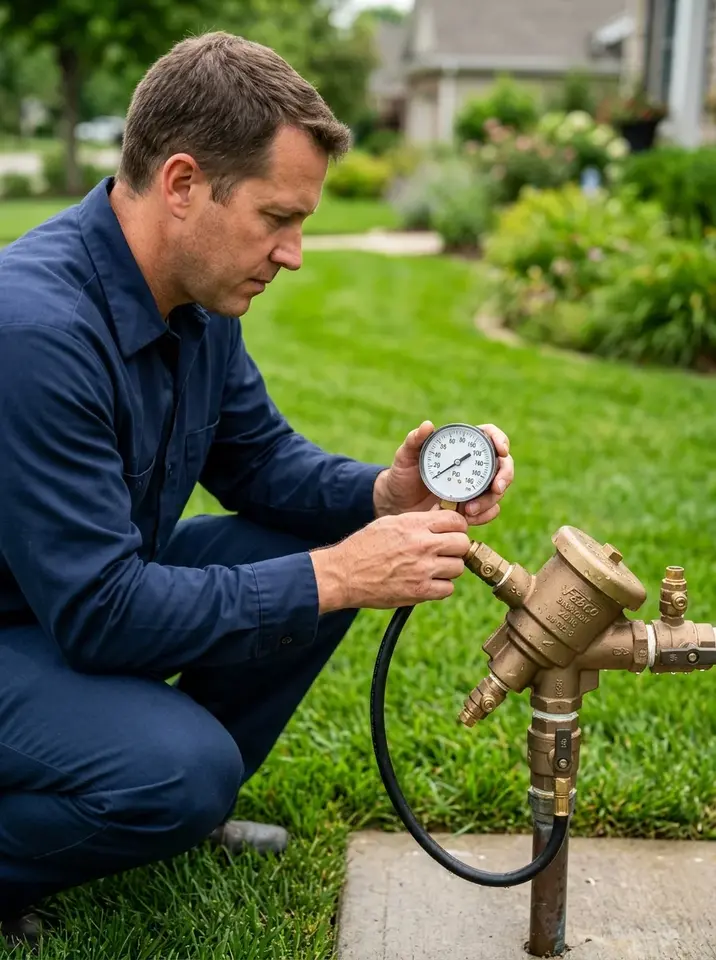
*Step 1: Zone-by-Zone Pressure Test
We cap off each zone at the manifold and pressurize it individually using a test gauge. Zones that hold pressure have no active leak. Zones that bleed down have a break somewhere on that lateral line.

Step 2: Isolate the Pipe Run
Once we know which zone is leaking, we use electronic listening equipment and systematic cap-and-test isolation to narrow the break location to a specific pipe segment. On main line leaks, we use a ground probe to listen for water movement in the soil.
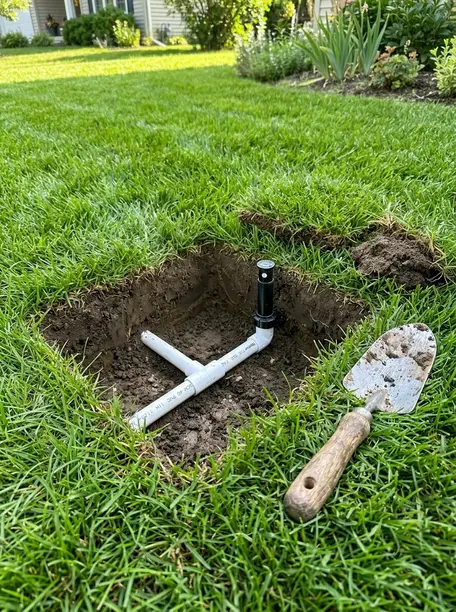
Step 3: Pinpoint Excavation
We excavate only at the confirmed leak location. Our cuts are small and precise. We do not trench the entire zone line to find a break.
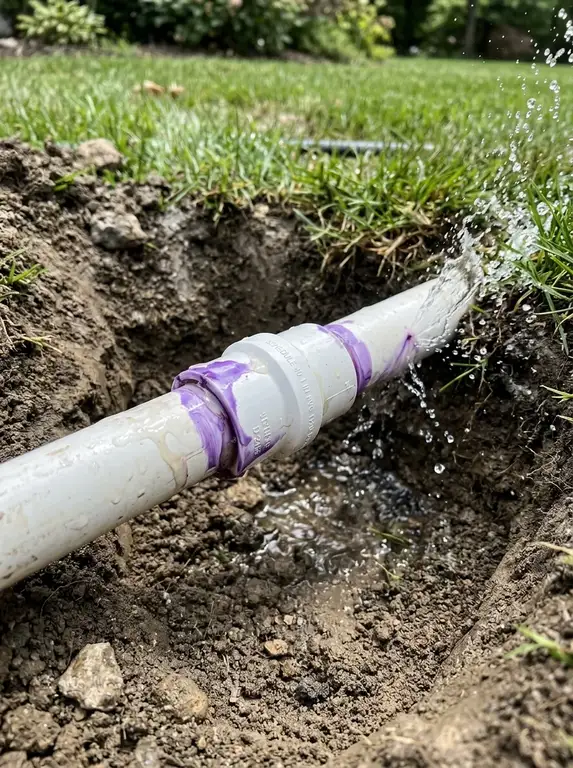
Step 4: Repair and Retest
We repair the broken fitting or pipe section using Schedule 40 PVC with solvent-weld joints and allow proper cure time before repressurizing. After repair, we retest the entire zone at working pressure to confirm the fix before we backfill.
If you are experiencing a zone that won’t shut off, this is a water emergency. Go to your backflow preventer or main water meter and shut the water off, then call us immediately. We offer emergency sprinkler repair Denton TX for situations that can’t wait.
Pipe Types We Repair
| Material | Common Use | Repair Method |
|---|---|---|
Schedule 40 PVC | Zone lateral lines, most common in Denton systems. | Slip-fix coupling or section replacement. |
Class 200 PVC | Older Denton installations from 1990s-2000s (thin wall). | Section replacement with Schedule 40 upgrade. |
Polyethylene Flex | Some drip system feeder lines and heads connectors. | Barb fitting or tubing section replacement. |
PVC Main Line | From meter to manifold (1 inch and larger pressurized line). | Full section replacement, solvent weld joints. |
If your system uses Class 200 PVC in the failed section, we recommend upgrading that segment to Schedule 40 during the repair. Class 200 walls are thinner and more prone to the same failure under Denton’s soil pressure cycles. The additional material cost is minor compared to the risk of another break in the same spot next season.
Underground Leak Detection FAQ — Denton, TX
We’re here to help. If you can’t find the information you need, feel free to reach out to us. We’ll be happy to answer your questions and help you find the right solution.