The Hidden Enemy: How Denton’s Clay Soil Destroys Irrigation Pipes
5-Star Rated
TCEQ Licensed
Same-Day Service
No Hidden Fees
Why Denton Homeowners Suffer More Underground Sprinkler Leaks
If you live in Denton, Texas, you are likely no stranger to the unique challenges posed by the local landscape. But while you might be focused on keeping your lawn green through the blistering summer heat, the real battle is happening underground. The culprit? The infamous Denton Soil Series, a type of earth known for its extremely high shrink-swell capacity. This unique geological feature makes Denton’s clay soil the hidden enemy of underground irrigation pipes, often leading to severe texas clay soil sprinkler pipe damage.
Many homeowners ask, “why do sprinkler pipes break denton?” The answer lies in the very dirt your home is built upon. As seasons change and moisture levels fluctuate, the soil beneath your lawn is in a constant state of motion. This movement exerts incredible pressure on everything buried within it, especially the rigid PVC Pipe that makes up your sprinkler system. Understanding the mechanics behind this hidden enemy is the first step in protecting your investment and ensuring your lawn remains a lush oasis rather than a cracked, muddy mess.
What Is Shrink-Swell Soil?
To understand the problem, we first need to define the terminology. Shrink-Swell Soil is a specific classification of soil, predominantly clay-based, that undergoes significant volume changes depending on its moisture content. When these clays absorb water, they expand or “swell,” taking up more space. Conversely, when they dry out during periods of drought, they contract or “shrink,” pulling away and leaving deep fissures in the ground.
The geological explanation for this behavior lies in the molecular structure of the clay minerals themselves, particularly smectite clays, which can trap water molecules between their layers. The Denton Soil Series is officially classified as a high-shrink-swell soil. This means the soil in Denton has an exceptionally high concentration of these expansive clays.
The constant expansion and contraction create a dynamic and unstable environment for anything buried beneath the surface. It’s like burying your pipes in a slow-moving, powerful vice grip. This constant motion is what leads to shrink swell soil irrigation damage, making it a critical factor for any Denton homeowner with an underground sprinkler system to consider.
Exactly How Clay Soil Cracks PVC Irrigation Pipes
The process by which Texas Clay Soil destroys your irrigation system is gradual but relentless. It typically follows a predictable step-by-step cycle driven by the weather.
- The Summer Drought: As the intense Texas heat bakes the ground, moisture evaporates from the soil.
- Clay Contracts: The high-shrink-swell clay begins to dry out and contract significantly, reducing in volume.
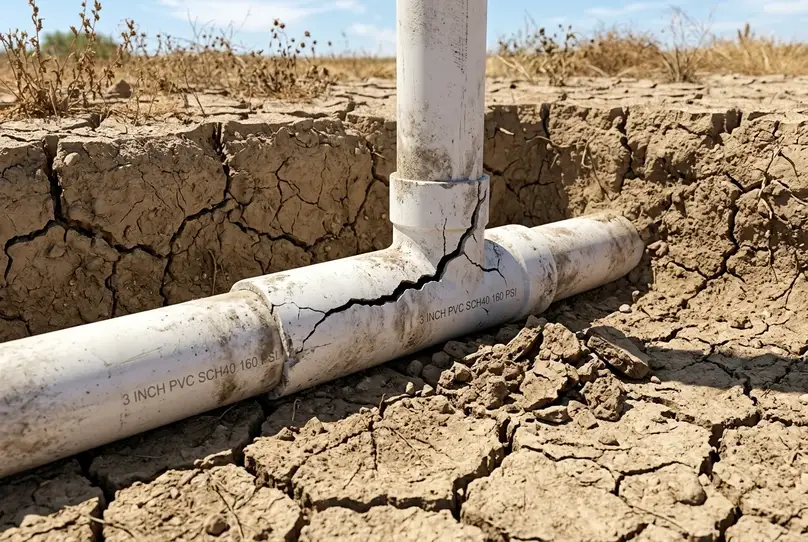
- Soil Pulls Away: As the clay shrinks, it pulls away from the PVC Pipe buried within it, leaving the pipes unsupported in the ground. The soil may also form deep cracks that expose the pipes to the elements and shifting earth.
- Fitting Joints Lose Support: With the surrounding soil no longer providing a stable bed, the pipes and joints are left hanging or bridging gaps.
- Stress Cracks Form: When the system turns on, the sudden rush of water pressure combined with the lack of structural support causes extreme stress at the weakest points—typically the T-joints and elbows. Over time, these stress points develop micro-fractures that eventually turn into full-blown ruptures.
- The Swell Cycle: When the rains finally return, the clay rapidly absorbs water and swells, exerting massive crushing force on the already weakened pipes.
The worst spots for this type of damage are often where pipes are most constrained or where moisture levels vary the most, such as under driveways, alongside sidewalks, and near the foundation of your home. The rigid concrete doesn’t move, but the soil does, creating a shearing force that easily snaps PVC.
How to Protect Your Irrigation System from Clay Soil Damage
While you can’t change the soil your home is built on, you can take proactive steps to protect your irrigation system from the devastating effects of Denton’s clay soil. The key is consistent maintenance and early detection.
- Annual Audit: Schedule a comprehensive inspection of your entire system at least once a year, ideally in the spring before the intense summer heat sets in. A professional can check for signs of stress and ensure all zones are operating at the correct pressure.
- Early Warning Signs: Be vigilant for the early symptoms of an Underground Leak. These can include inexplicably high water bills, sudden drops in water pressure in specific zones, or unusually lush, green patches in an otherwise dry lawn. If you notice any of these signs, don’t wait—seek professional underground leak detection Denton TX immediately.
- Foundation Watering: Maintaining consistent moisture levels around your home’s foundation is crucial. This not only protects your foundation but also helps stabilize the soil around your main irrigation lines. Consider installing a dedicated foundation drip line to provide slow, steady moisture during dry spells, which helps mitigate the extreme shrinking of the clay.
- Schedule Leak Detection: Proactive leak detection can save you thousands of dollars in water waste and landscape repair. Utilizing advanced acoustic and pressure-testing equipment, experts can pinpoint leaks before they surface, minimizing damage to your property.
Clay Soil Damage – Symptoms, Causes, and Repairs
When dealing with shrink-swell soil, recognizing the signs of damage early can make a significant difference. Here is a quick reference guide to common symptoms, their likely causes, and the necessary repairs.
If you are experiencing any of these issues, it is highly recommended to seek professional sprinkler repair in Denton TX.
Clay Soil and Irrigation – FAQs
Still have questions? Give us a call. We’re happy to explain your options, answer any questions you may have, and help you determine the best solution for your sprinkler system.